
Heyman Art Lab
Reimagining MoMA's Samuel and Ronnie Heyman Family Art Lab.

timeline:
4 weeks / spring 2026
Spatial Design
Experiential Design
The Brief
I was inspired by the MoMA Samuel and Ronnie Heyman Family Art Lab's blend of spatial design and art education, and set out to create a re-imagination of the space. I developed a spatial and curriculum redesign for this project. All CAD modeling was completed on Rhino.
context
The mission of MoMA's Art Lab
The MoMA Samuel and Ronnie Heyman Family Art Lab is a space where children and adults can explore the ideas, techniques, and tools of modern and contemporary art through a rotating theme. Take a look at past exhibitions hosted in the space.

inspiration
A peaked interested in the intersection of design and education
The intersection of design and education has always been a passion of mine. Here are some organizations, projects, and people who inspired this project.

Lifelong Kindergarten, Mitchel Resnick
Resnick leads the Lifelong Kindergarten group at MIT Media Lab. I've been enjoying his podcast, where he advocates for education rooted in imagining, creating, playing, and reflecting.

Bluecadet' s design of the MIT Museum
Bluecadet produced over 20 interactive moments within the MIT Museum, creating an exhibition that makes complex science accessible through engaging experiences.
research
Understanding vistor's experience
MoMA's Art Lab is beloved by visitors, but it's held back by its own location and capacity. Tucked away on the ground floor of the Education and Research Building, the space is easy to miss, and once found, often too small to accommodate demand: families frequently wait in line just to get in, or are turned away altogether once the space reaches capacity.
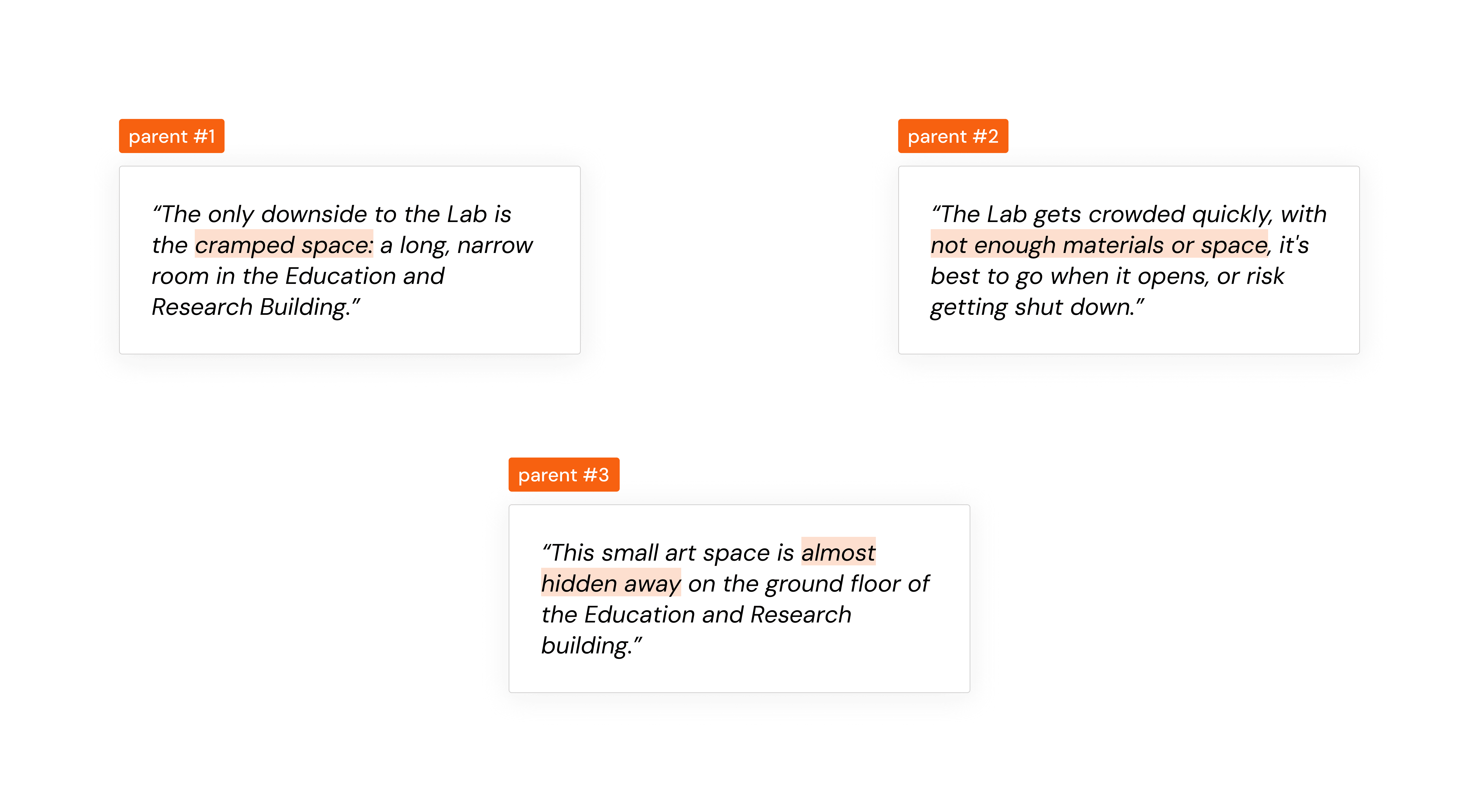
Sources: Adams, Mommy Poppins; Korb, Medium
re-imagination
What could MoMA's Art Lab look like?
Based on feedback on the Art Lab, I wanted to reimagine what the space could look like with a larger presence within the museum. This aspirational redesign holds onto everything that makes the space loved, while giving it the room and visibility to match. The redesign followed two separate tracks:
Spatial Re-design
Redesigning the space and architecture
Curriculum Re-design
Crafting an exhibition with new interactions
Experience


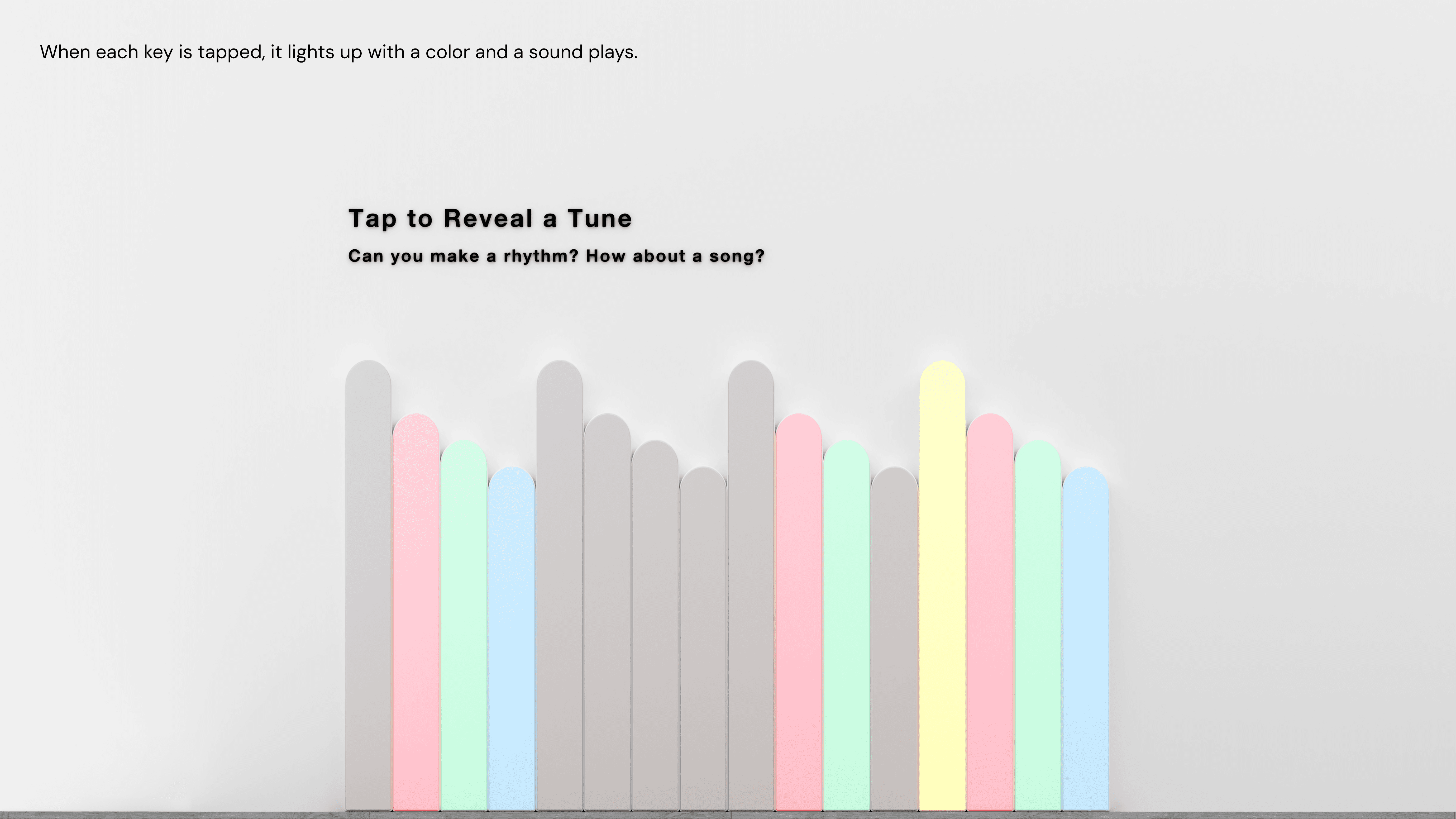
Spatial design



Reflection
This project was my first dip into spatial design and truly unlocked a new passion for me. Especially as we enter the age of AI, a prevelant topic I've been thinking about is how technology can engage young minds in creative and critical ways. This redesign allowed me to think in a very aspirational, blue-sky way, and it was a great opportunity to explore the topics I've been researching and unlock a new part of experiential design
Curriculum Development
If I had more time on this project, I would love to curate and create a more in-depth curriculum and set of interactions. In a later exercise, I may create interfaces for the light table, or clearer instructions to guide visitors on how they might use the space.
Have something to take home
One thing I learned during this project is that the user's journey doesn't end in the room. If I were to add to this project, I would craft an interaction where participants can take something with them, so the impact is carried out outside of the space.