
Peg Pals
A habitat-based educational toy for children.

timeline:
6 weeks / spring 2026
Product Design
User Research
The Brief
Peg Pals is a habitat-based educational toy for children. It works on a pegboard system and features, tactile tiles, animal sounds, and an expanding play mat that doubles as storage. The toy was created to help children get off their screens and curious about the natural world. Each Peg Pal edition features a different endangered animal species and creates a sense of excitement for children as they explore new animals and build their own worlds.
Problem
Gen alpha & the sensory gap
Children are spending increasing amounts of time on screens, limiting their sensory experiences and their connection to the natural world.

How might we design a children's toy that educates and engages young minds without relying on a screen?
Research
Targeting a clear demographic
Children's toys vary greatly by age and therefore looking into age-determination guides, crafting user personas, and conducting marking research was a very important step in the process. The target age group for Peg Pals is 3-6 year olds, take a look at how I got there.
Age Determination
3-6 year olds felt like the ideal age group because this group of kids are actively learning about the natural world, making animal habitats a naturally engaging theme. This age group also have the fine motor skills and the developmental curiosity to find toys both engaging and educational.
source: Age Determination Guidelines, U.S. CPSC
User Persona
Recognizing the specific needs of the buyer and user was essential to creating a toy that met the standards of both parents and children.


Bridging the gap in the market
When it comes to animal and habitat toys, the market splits into three separate categories: auditory toys, world building toys, and educational toys. Peg Pals combines all three into one toy and unit.

Key themes that were noticed
Through research, I synthesized the findings into four criteria that Peg Pals would need to meet in order to satisfy both parents who buy the toys and children who use them.
Educates Children
Screens often lack the ability to engage young minds in a way that uses critical thinking.
Easy to Clean and Store
Toys with many parts are difficult to store and are frustrating for both children and adults.
Allows Free Play
Free play gives children the agency to imagine stories while expanding their creativity.
Encourages Group Play
Group play builds communication and social skills that are important for child development.
Solution
Meet Peg Pals
Peg Pals is a toy that allows children to build and customize an animal habitat for endangered species by arranging pegs representing land, water, trees, and animals on a pegboard. In this edition of Peg Pals, you can help arrange the Tree Kangaroo's habitat, a marsupial native to Australia and New Guinea.

The key features of Peg Pals
Explore the features of Peg Pals that make it an engaging sensory and educational toy.


Process
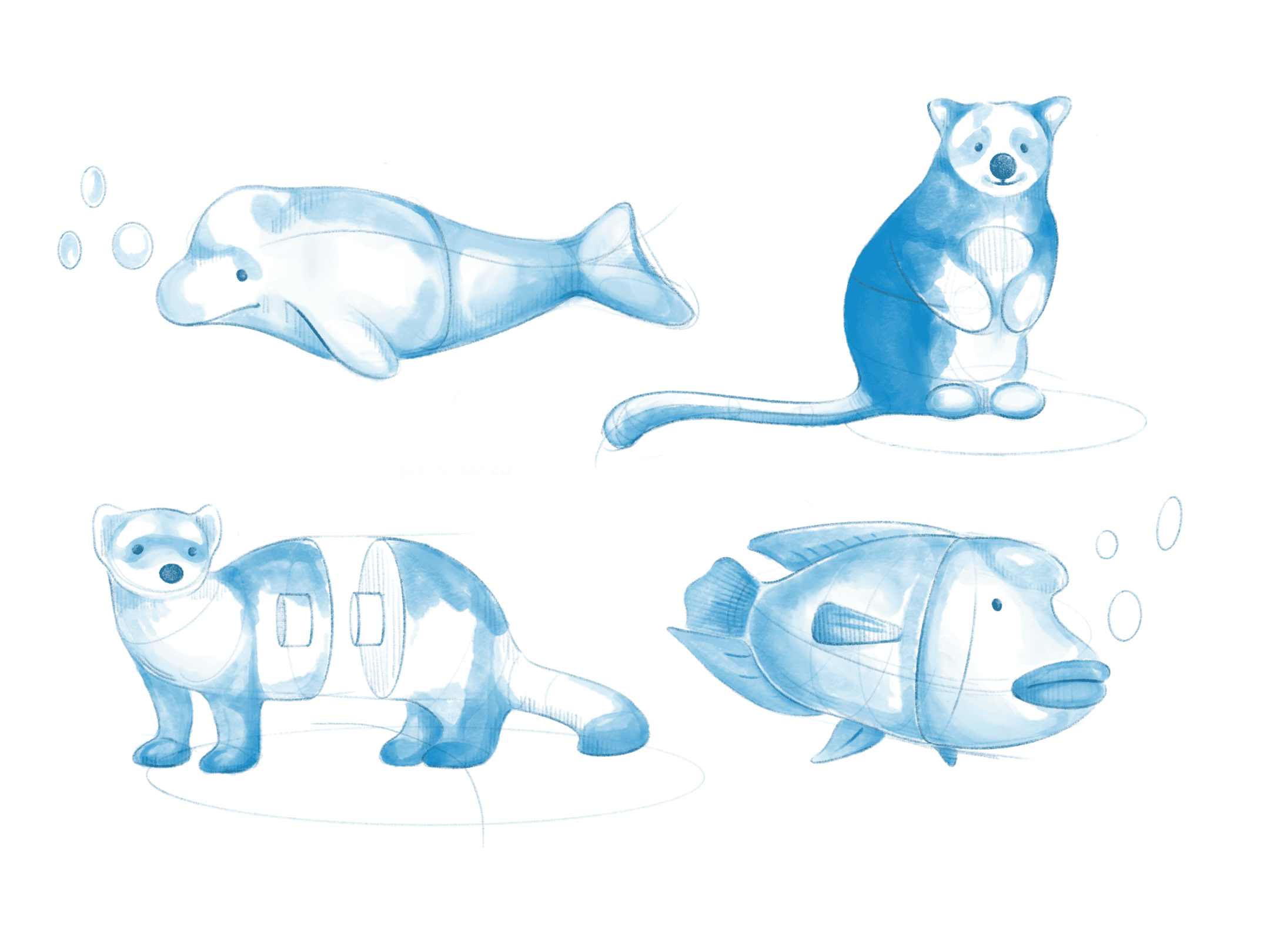
Sketching my ideas out
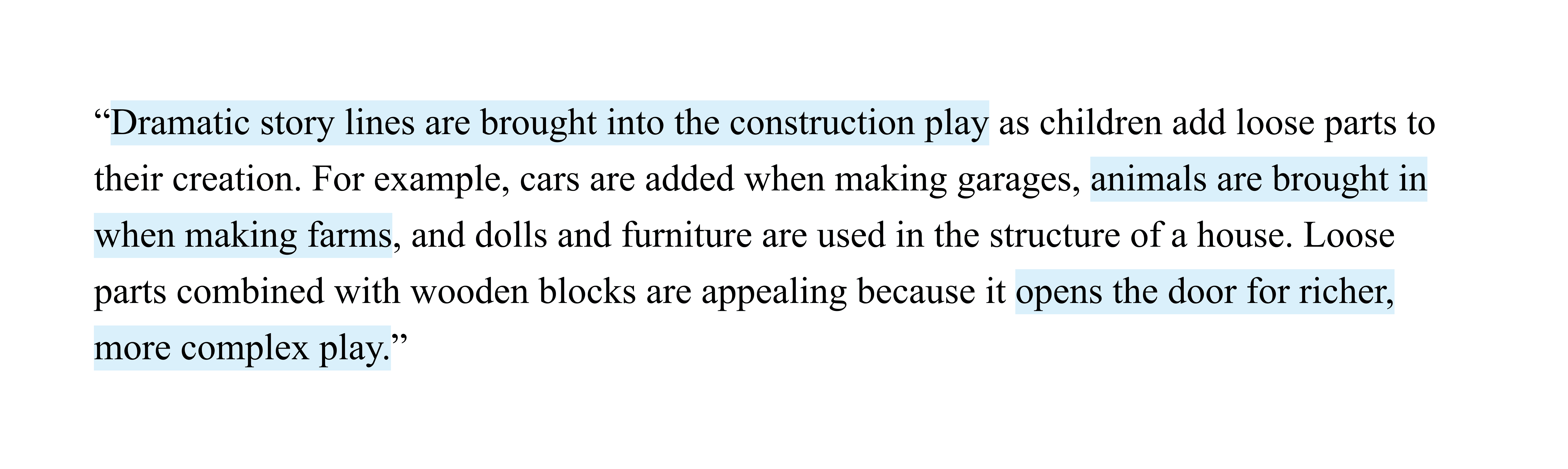
During the early ideation phase I experimented with exploring different animal toy concept and learning about different endangered species.
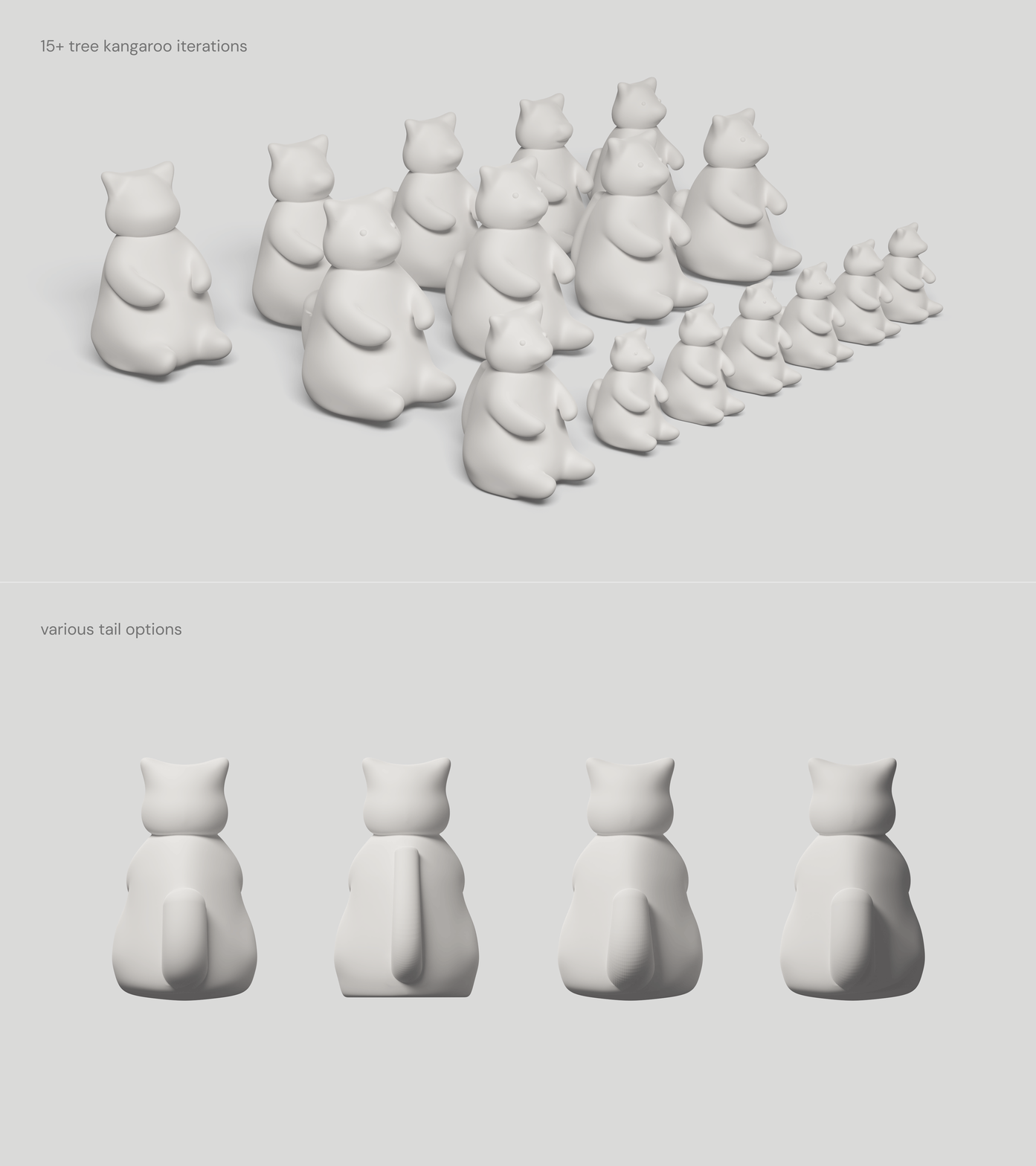
Creating an army of figurines
CAD modeling for the animal figurines was done in Rhino, where organic, sculpted shapes came more naturally, whereas the pegboard and specific tolerances were done in Fusion 360, where I could input precise measurements.

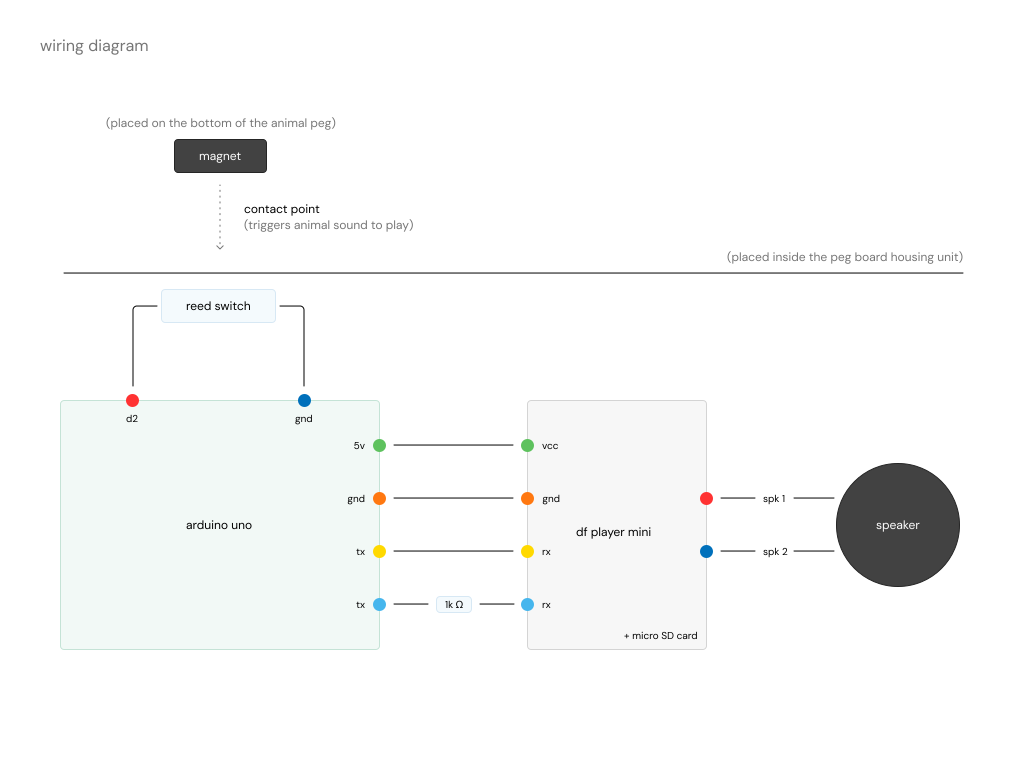
Internal Electronics
A key feature of Peg Pals is the auditory feedback that occurs when a peg is placed down. I used Arduino, reed switches, and magnets to create this interaction.
prototype
final wiring diagram
A storage solution
I wanted the packaging that the toy came in to double as a storage solution and play mat. This addressed parents' need for a storage solution while also encouraging children to play off the mat as well. I prototyped this folding mechanism in Bristol board.
prototype
final play mat

reflection
More to come…
Beyond this first toy design project, incorporating "play" into the experiences and products I design is an interest I want to keep pursuing, whether thats "play" in spatial design and architecture or "play" as a tool for community building. Throughout this project, I felt challenged by the parameters of designing for such a young age group, but also excited to create a tool that would push kids to learn and inspire them to engage with the natural world.