
Sculpie
A toolset for art therapy and creative emotional expression.

timeline:
8 weeks / fall 2024
Product Design
User Research
The Brief
Sclupie is a creative expression toolkit designed for use in a clinical art therapy setting. It aims to make creative and artistic expression more accessible to those who lack sustained dexterity in their hands and have difficulty participating in traditional art therapy. For this project, I partnered with Stephanie Machado Jenkins of SMJ Wellness, a behavioral health and workplace wellness corporation located in Whittier, California, and created sculpie to be added as a part of her own therapy toolkit collection.
Problem
The limitation of art therapy
Traditional art therapy tools depend heavily on fine motor control, grip strength, and sustained dexterity. For individuals with motor-compromised limitations, this creates physical barriers to participation.
"How might we… make art therapy more accessible for motor compromised individuals?"
solution
Meet Sculpie
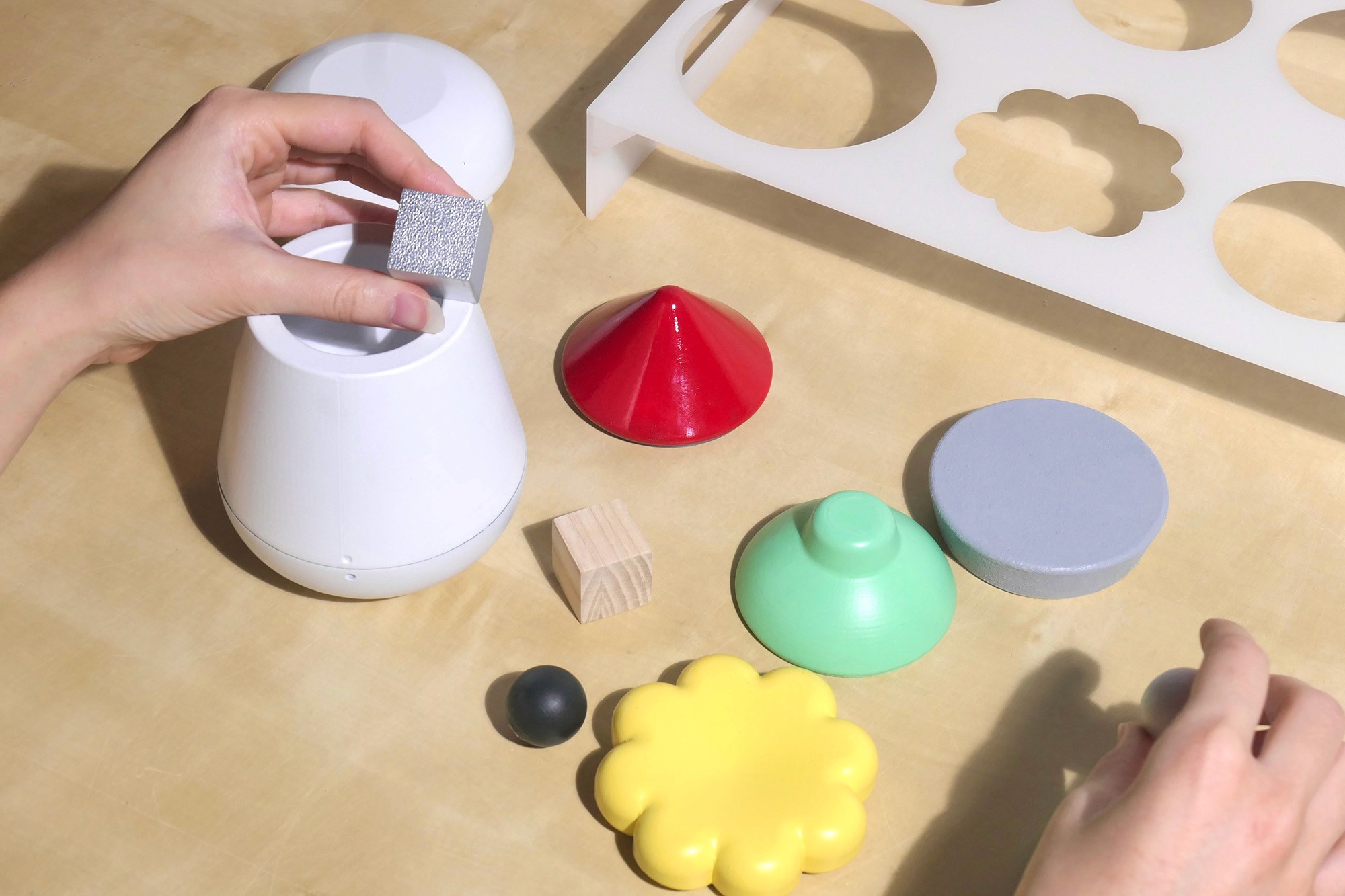
Sculpie reimagines art therapy tools through modular, magnetically connected symbols that prioritize sensory engagement over fine motor precision. Participants attach symbols together to express how they feel, think about it like sculpting your emotions.

The key features of Sculpie
Explore the feature that make Sculpie an accessible tool for creative expression.


Research
Mapping users' emotional associations
I surveyed 20 individuals, ages 10 to 65, asking which colors, textures, and memories they associated with four different emotions. The responses were compiled and used to inform Color, Material, and Finish (CMF) decisions later in the design process. This step was integral to understanding which colors and textures help people express how they feel.

Talking to a professional
Consulting Mrs. Jenkins, a professional art therapist, gave me valuable insight into the field and her practice. In her therapy sessions, she maintains an extensive collection of symbolic objects used in art and sand therapy, encouraging clients to "play" with them to depict and process their thoughts and emotions through tactile expression.
"Symbols make people feel safe when they're emoting. As art therapists we observe the process, not the product… there are no prompts, just, open ended question and expression."
Stephanie Jenkins LCSW
Takeaways
Connecting with people gives you the most insight
The challenge with this project was creating a product that met the accessibility needs of the clients as well as the needs of Mrs. Jenkins, who would be using the tool in her practice. I organized both user groups' needs into two lists that guided my design process.
User's Needs
A low stress experience
Friendly, inviting design language
Pieces that connect easily
Mrs. Jenkin's needs
Easy to disinfect between clients
Easy to store
Offers a wide variety and range of symbols
Process
Getting my ideas across
Taking in all I had learned from my research, I began sketching a concept of what Sculpie could look and feel like.

CAD Modeling
I began translating my sketches into parts modeled in Fusion 360. Below you can find the different parts of the base unit. Each component of Sculpie contains an insert tray that houses magnets, allowing all the components to connect easily.

Color, Material, Finish (CMF)
All CMF choices came from the initial research conducted where participants created emotional associations with certain colors and texture. Below show the final CMF chart containing a wide range of color, material, and finishes to prompt emotional expression.

vision
Long term vision and impact
The Sculpie toolkit was implemented in art therapy practices at SMJ Wellness, a behavioral health and workplace wellness corporation located in Whittier, California. The goal for Sculpie is to open up opportunities for clients with motor-compromised abilities by creating an inclusive and playful art therapy experience.